About Me

My photo
Sorocaba, São Paulo, Brazil
I am into: Economy, Politics, photograpy, History, books, magazines, graphic novels, musics, movies, IT, networking, culture, friends, travels, cooking, sex...

Friday, October 29, 2010

Indonésia


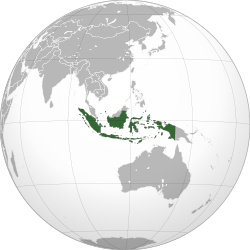
Localização  República da Indonésia

A Indonésia tem estado no noticiário nos últimos dias depois de ter sido atingida por um violento terremoto, seguido de uma tsunami de mais de 4 metros nas remotas ilhas de Mentawai e de em menos de 24 horas o vulcão Merapi, na Ilha de Java entrar em erupção colocando o arquipélago em tremendo alvoroço.

Para nós Brasileiros, isto parece o fim do mundo, mas aqui na Ásia acontecimentos desta natureza por mais traumáticos e danosos que sejam fazem parte do dia-a-dia de milhões de pessoas. Para entender um pouco melhor o que se passa temos que voltar às aulas de Geografia.

O arquipélago é um país situado entre o Sudeste Asiático e a Austrália (mapa acima), composto por mais de 17.000 ilhas vulcânicas. Entre as mais importantes destacam-se: Borneo, Sumatra (epicentro do terrível terremoto/tsunami de 2004 com 350.000 mortos na região), Célebes e Java (onde se encontra a capital Jakarta e a maior concentração da população).


Placas Tectônicas


São as zonas de fronteiras entre as placas terrestres onde se registram a grande maioria dos terremotos e erupções vulcânicas.

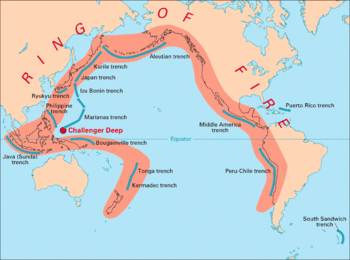
Anel de Fogo do Pacífico


O círculo de fogo é uma área em forma de ferradura com mais de 40.000 km de extensão, tem mais de 452 vulcões e é o lar de mais de 75% de vulcões ativos do mundo.

A Indonésia juntamente com China, Japão, Taiwan, Filipinas, Nova Zelândia e demais países simplesmente estão localizados dentro desta vasta área.

Minha mãe sempre me pergunta: "Menino, o que você está fazendo aí? Com tanto lugar no mundo por que estas pessoas vivem nesta área?"

Na verdade, nós Brasileiros somos de certa forma abençoados pois estamos localizados no meio da Placa Sul Americana e longe das bordas, ou seja, das áreas críticas, mas recentemente tremores no Chile tem sido sentidos até em Brasília...

Mas voltando à pergunta de minha mãe a resposta é simples: "Esses povos tem ocupado estas áreas por gerações e gerações. Se tornou parte da vida diária pensar em preparativos e rotas de fuga em caso de desastres. Ninguém aqui olha para as ondas do mar da mesma maneira que olhamos".

Instintivamente, seguidos os primeiros tremores de um terremoto todos correm para as áreas altas e esperam para ver o que acontece. Logicamente, dependendo da hora, local e intensidade simplesmente não há tempo para nada e essa é hoje em dia a luta da Ciência: monitorar os abalos sísmicos, tentar prever catástrofes e poder desta maneira avisar as populações a tempo de salvar vidas.

Invariavelmente o avanço da Ciência também esbarra em dogmas religiosos onde ainda por vezes populações inteiras não se "mexem" até que seja tarde demais. No caso da erupção do vulcão Merapi nesta semana, houve alguns "villagers" que quando perceberam o vulcão simplesmente não procuraram refúgio porque o "Gurú" ou "feiticeiro" da vila simplesmente disse que os espíritos estavam raivosos, mas não iriam lhes fazer mal... moral da história: todos morreram!

Depois de cada catástrofe muitas vezes é um esforço tremendo para as equipes de resgate e de apoio chegar às áreas atingidas devido à sua remota localização e difícil acesso. Planos de evacuação são postos em prática, mas novamente encontra resistência por parte de uma população que simplesmente não tem para onde ir ou ainda acredita que Deus ou Allah virá em seu auxílio... e assim a vida vai, tragédia após tragédia.

Tenho amigos na Indonésia que no geral têm uma visão fatalista do assunto: "Não há o que se fazer além de correr e tentar ajudar aqueles que sobreviveram!".
Um deles, Sam, que mora na área do vulcão Merapi está desaparecido...


Wednesday, October 27, 2010

Islamic Fundamentalism

As everybody knows, after 9/11 it is growing stronger in the west a fear of everything Muslim. This fear has lead to wars in Iraq and Afghanistan, but far from reach stability it had only deepened the already huge gap between two completely different worlds.

In order to understand the root of the threats we face nowadays by Islamic Fundamentalist groups we have to visit the history of Pakistan's foundation and events in Afghanistan in the last 30 years.


Pakistan 

It is here in the Indus River valley (map below) that two very different civilizations collide. To the southeast lie the fertile lowlands of the Indian subcontinent. To the west and north stretch the harsh, windswept mountains of Central Asia.

It is also where two conflicting forms of Islam meet: the relatively relaxed and tolerant Islam of India versus the rigid fundamentalism of the Afghan frontier.

Pakistan Country map


In 1947 India, a longtime British colony gains its independence and is partitioned into India and Pakistan, a nation for Muslins. 

Back in India, Mahatma Ghandi, the pre-eminent political and ideological leader of India's Independence Movement believed that the question of partition should be resolved by a plebiscite in the districts with a Muslim majority and when in 1946 Jinnah, the founder of Pakistan called for a Direct Action what started a huge manslaughter Ghandi was infuriated. 

The Partition displaced up to 14 million people of the former British Indian empire meaning that  large populations moved from India to Pakistan and vice versa, depending on their religious beliefs. 

Muslim residents of the former British India migrated to Pakistan (including East Pakistan which is now Bangladesh), whilst Hindu and Sikh residents of Pakistan and Hindu residents of East Pakistan (now Bangladesh) moved in the opposite direction. It was one of the biggest Human Migration in History.

Maybe what Ghandi was afraid was a manslaughter which followed. As many as a million people died in sectarian riots, massacres and killings along the way.


60 years later

Pakistan today is a country with 165 million people (97% Muslims) but so far it has never been united as one Nation. 

Since its independence It has been involved in four wars with neighbouring India and several borders skirmishes with Afghanistan which made its successive Governments spend billions on the Military while neglecting the basic needs of its people for justice, health, education, security and hope what naturally lead to a growing herd of opponents demanding a return to civilian and democratic rule. It is still a country where politics are made of assassinations, plots, bomb attacks, etc.

Ordinary people are also stifled by a government and police force that are among the most corrupt in the world, led by an army that answers to no one.
It was a similar lawlessness that drove the people of Afghanistan into the arms of the Taliban in the mid-1990s and am afraid it might be the same faith Pakistan will face whether political chaos. poverty and corruption remain.

In 1979 when then Soviet Union invaded Afghanistan and brought the cold war once more to Asia, Pakistan aligned with USA which dropped millions and millions of dollars into it for financing the Mujahideen (Muslim fighters) insurgency who had fled Afghanistan. 

The problem is that what the Mujahideen have done was to declare a Jihad (Holy War) against the Soviets with American money... USA ended up financing extremists groups, among them the Al-qaeda of Osama bin Laden, so by that time Osama was an ally. (sic!)

After the war was ended it was already too late and the seeds of Fundamentalism was deeply rooted into the strongholds of northern Pakistan where these fanatics found a secure place to hide.  Combined with the misery and lack of security of the people the forces of Islamic radicalism are gaining strength and challenging Pakistan's moderate majority...


Afghanistan


A former focal point of the Silk Road and human migration, Afghanistan was destroyed during the 10 years war with Soviet Union. After the war the Americans just left the country to its own faith which lead to a Taliban takeover in 1996. 

When in power, the Taliban enforced one of the strictest interpretations of Sharia law ever seen in the Muslim world, and became notorious internationally for their treatment of women. Women were forced to wear the burqa in public. They were allowed neither to work nor to be educated after the age of eight, and until then were permitted only to study the Qur'an. They were not allowed to be treated by male doctors unless accompanied by a male chaperon, which led to illnesses remaining untreated. They faced public flogging in the street, and public execution for violations of the Taliban's laws.

Devastation of war, scars of the Taliban rule, misery and so on are still felt in Afghanistan. The country has been rebuilt slowly with the support from the international community while dealing with the Taliban insurgency.

After evading U.S. forces throughout the summer of 2002, the remnants of the Taliban gradually began to regain their confidence and launched the insurgency that Mullah Mohammed Omar had promised during the Taliban's last days in power. During September 2002, Taliban forces began a recruitment drive in Pashtun areas in both Afghanistan and Pakistan to launch a renewed "jihad" against the Afghan government and the U.S-led coalition. Pamphlets distributed in secret during the night also began to appear in many villages in the former Taliban heartland in southeastern Afghanistan. 

Small mobile training camps were established along the border with Pakistan by al-Qaeda and Taliban fugitives to train new recruits in guerrilla warfare and tactics, according to Afghan sources and a United Nations report. Most of the new recruits were drawn from the madrassas or religious schools of the tribal areas of Pakistan, from which the Taliban had originally arisen. 

Major bases, a few with as many as 200 men, were created in the mountainous tribal areas of Pakistan by the summer of 2003. The will of the Pakistani paramilitaries stationed at border crossings to prevent such infiltration was called into question, and Pakistani military operations proved of little use.

There is no political stability in both Pakistan and Afghanistan. Misery, violence, insurgency, lack of justice and law enforcement altogether lead to despair and frustration.

When government fails to people, people get angry. They lose faith in the system and look for alternatives which gives lots of ground to Islamists or Taliban or Al-Qaeda to grow. 
When citizens are denied their basic human rights, they become radicalized, powerless and easily manipulated.


Peshawar, northern Pakistan

A group of students from a madrassa nearby or religious school in their late teens or early 20s. They say their dream for Pakistan  is "a peaceful nation, in which justice prevails, in keeping with Islamic law." But they believe, as many there do, that Islam is under attack by America, by the West, by India and by their own Government. Under these circumstances, they say, Jihad or Holy war is justified...

What about suicide bombing? Is it sanctioned by Islam? 
"You must think we have classes here in making bombs or AK-47s" exclaims one boy and they all laugh!

We cannot label Muslims as "terrorist" cause first of all  generalizations are stupid and usually don't reflect the reality.  Islam has 1,5 billion adherents and is the second largest religion after Christianity making up 23% of world's population.

The clashes between moderates and extremists in Pakistan today reflects this rift and can be seen as a microcosm for a larger struggle among Muslims everywhere.

I live in Malaysia, a country with a majority of Muslim population. Have several Muslims friends and I dun think one of them will blow themselves anytime soon, but Malaysia is a moderate country and has a completely different Economic and politic background, but even here from time to time you can see some fundamentalism like the caning sentence imposed on Kartika Sri Dewi Shukarnor, a divorced mother of two, for drinking beer in a resort bar two years ago. Later due to pressures coming from the international community the sentence has been commuted to community service on the orders of the Sultan of Pahang.

Should the west be afraid of Muslims or Islamic Fundamentalism?


Monday, October 25, 2010

Taking for grant


Brazil left Dictatorship in 1985, so for more than 25 years (my lifetime as an adult) we've been a free and democratic country even though echoes from our recent Military past still carry wounds and dirty secrets, but after all our Democracy strengthened over the years, we have a free press, we can go to the streets and complain about the Government without being afraid to be thrown into the jail, we have freedom of religion, etc. Naturally Brazil has a long way to go in order to solve its social unbalances and prejudices, but that's another story.

Coming from a westerner country, therefore with a westerner mindset and culture we end up taking for grant things like freedom of speech, thought, religion, expression, etc... But depending on where you are going to live the reality is something else. That was me five years ago when I arrived in Asia to an island country self proclaimed Republic of Singapore.


Apart of all adventures coming from the process of adapting myself to a new country, culture, environment, food etc there was something different in the air... 

Singapore is a country with a long history of immigration. It has a diverse population of close to 5 million people made up of Chinese, Malays, Indians, Asians of various descents and Caucasians. 42% of the population are foreigners who work and study there. Foreign workers make up 50% of the service sector in Singapore.

One must go under the surface to understand Singapore. Its population is formed by 74% of Chinese, 14% Malays, 9% Indians and 3% of Eurasians, Arabs, etc. So, it is a Chinese driven country.

Singapore is a parliamentary republic with a Westminster system of unicameral parliamentary government representing different constituencies. The Constitution of Singapore establishes representative Democracy as the nation's political system... bla! bla! bla! Pure Bulshit... 
All the power lays from start on a single family: The Lee family.

Lee Kuan Yew became Prime Minister in 1965 (when Singapore gained its sovereignty), was succeeded by another mafia member in 1990 and since 2004 Lee Hsien Loong the eldest son of Lee Kuan Yew is the boss... By the way Lee Kuan Yew is a Minister Mentor, a post created when his son, Lee Hsien Loong, became the nation's third prime minister.

Lee family is also behind Temasek Holdings a company which manages all Singapore Government's direct investments. Ho Chin the wife of the Prime Minister is the big boss there...
Do I need to say something else?

There is no political freedom nor freedom of press, thought and anything. Even to make a parade you need prior government approval. There is a long list of international news correspondents who were "invited" to live the country over the years and if you want to read a newspaper you have to get "The Straits time" patronized by the government. Denial of civil and political rights in Singapore are simply of Governmental policy.

Fines are a common way of suppressing speech and opposition in Singapore. Indeed one of the most popular methods of silencing opposition is politically motivated defamation action. Meaning: talk bad of the Government, they come to you, cancel your business license, fine and prosecute you. You will expend all the money you have in the vicious Singaporean courts! 

Human rights violations in Singapore are rife: the country detains conscientious objectors to military service, has mandatory corporal and capital punishment for many offences, has some of the most draconian security legislation in the world (and uses it) and institutional discrimination against ethnic Malays results in their poverty and often imprisonment. A simple graffiti can lead you to be canned...
Ah, homosexuality is illegal and punished severally by law. I have never seen a country with so many gays within the closet!

 You can have a very comfortable life over there. It is one of the lower Tax countries ever, but you have to give up all your sense of Justice, Democratic spirit and become a robot... also and ever worse you have to live among brain washed Singaporeans who think that's the best country in the world.

Sunday, October 24, 2010

Overdose of Religion


Growing up in a traditional Catholic family I was driven since my early days to the Church. It was a weekly routine... every Sunday there were masses at the Church nearby. Being only a kid, without too many leisure options, going to the church always represented maybe the only way to get to know more kids, apart from the school and to sing (yes, I loved it and there were plenty of music at the Sunday masses). 

There are plenty of activities at the Church for kids: Parish parties with all its sweets, you could be trained to assist the priest during the masses (a great honor which would make your parents very proud of you) and among others there were the catechism, a kind of Sunday school after the masses where you would learn about the Bible in preparation for the sacraments to be received during your Christian life.

The first one was the Baptism (received right after you were born), then Confirmation also known as Chrismation (kind of confimation of Baptism) and Eucharist (the most important one which completes Christian initiation). In my case, Eucharist came before the Confirmation but I had to go for 4 years of catechism in order to get it. 

Again, as a kid it was fun and made our parents very happy but as you start to grow up and find some other things to do it becomes a problem which usually comes when you reach Puberty and naturally have a lot more interests outside of the Church, but still haven't finished your Christian studies. Another important factor is that after years of "brain wash" you start questioning its effectiveness and your own beliefs, which for me it is just a natural step of growing up. 

The point is that once you have undergone for all these years at the Church, find now difficulties to reconcile your agenda and on top of that have doubts related to all these Church stuff you simply don't wanna go anymore and then a war is declared at home. Naturally that's not the case in all families once the degrees of "practicing Catholicism" varies a lot, but in my case it was a nightmare. It all started with the Confirmation which my father wanted me to do at all costs and I didn't.

To make a long story short and to avoid anymore fights and menaces to leave home, etc I went to the thing, but it was the first Sacrament I took completely against my will and am sure it was not valid if you put it from a Catholic perspective. Anyway, nowadays I dun give a shit for that!

I was always interested in History, read voraciously and knew a great deal about Christian History: its role in countries politics, sales of Indulgences, Spanish Inquisition, the Cruzades, all the corruption inside the Church, its conflicting dogmas, its position towards HIV/AIDS, condoms, contraceptive methods, abortion, homosexuality and all its hypocrisy... All these made myself uncomfortable with my own faith and what I could get from it, so I distanced myself from the Church.

Hypocrisy was always something which annoyed me. Remember when a kid at the masses, was always looking at the people around. I knew most of them, knew their sins: alcoholics, adulterers, homosexuals, robbers, husbands who beat their women and kids back home, etc... they were all there pretending to be something they weren't.

I really think a Human Being should have some sort of Belief. It doesn't matter which god you pray to, you need to believe there is something else out there. It brings you comfort and there are moments in life you really need it, but one should find balance in everything and when there isn't, intolerance and hypocrisy grow. 

To be honest it is difficult for me to position myself in terms of Religion nowadays because I believe in God, but God for me is really something too big to be fitted into one Religion. If you look deeply at any Religion you will soon realize that men drove them according to their own will and prejudices. There are things simply unacceptable for me like restrictions of food (halal/Kosher, etc), the role of women, fasting, animal sacrifices, discrimination of any kind, dangerous pilgrimages (the hajj), idols, deification of any person (the Pope, Ayatolahs, Prophets, etc), self reference as The chosen people... Ehrmmm!

We should search for simplicity in all things in life and Religion should be as simple as that: one has his beliefs, lives according to that without prejudice of any kind and most important without trying to convince others that his own God is the only one. Forget others, live your own life.

Related to myself had already my overdose of Religion!

Saturday, October 23, 2010

Recipe for happiness


In my former work I met a lot of assholes as usual but once back in Brazil we received a visit of a wise man. A German person who had been living in USA for more than 30 years.
Easygoing, relaxed and wealthy his favorite hobby was sailing.
He had a boat which he usually took with his wife and just traveled around the world, only the two of them.
U know that thing: It is a weekend, let's take the boat and go down to Bahamas!...
In the same way we just take a car and go to a shopping mall...

In one of our encounters and surrounded by other colleagues from work, someone just asked him what was his recipe for happiness. To which he answered straight away:

"You need only five things to be happy:

First: you must have a belief. Whatever god you want, you must believe there is something else out there to give you some purpose on your life and make you a better human being;

Second: you need to have someone to love and be loved back

Third: you have to get a job, which you enjoy and provides for all your needs;

Forth: you need to have a hobby... everybody needs some distraction;

Fifth: you need to have a social work, to give something back to the society you live in...and gave you so much"

Maybe the classification is not exactly that, but since them that's also my recipe for happiness and I am happy to have met such a person.
Our lives took different paths but I will never forget those words.

Be happy, at the end it is all that matters!

Quem ficou pelo caminho


Várias pessoas cruzam nossos caminhos desde a mais tenra infância,
algumas ficam outras simplesmente desaparecem no passado.
Que mecanismo é que este que nos faz simplesmente descartar outros seres?
As pessoas que ficaram em nossas vidas, por que ficaram?
As que se foram, por que se foram?

A vida nos leva por caminhos e lugares diferentes e durante esta trajetória
também nos tornamos seres diferentes, com objetivos e sonhos distintos.
Aí começamos a desvendar algumas razões...
Primeira: geográfica, Segunda: Similaridade...
O link de qualquer relação seja ela afetiva ou de amizade é o que temos em comum.

Se gostamos de cinema e de tomar uma cervejinha no boteco
iremos automaticamente descartar quem não está no mesmo bote.
Como temos vários interesses temos também vários grupos de amigos.
No decorrer da vida os interesses mudam... também os amigos!


Isto também explica porque muitas vezes não temos amigos entre os próprios familiares.
Os laços que nos unem são familiares e só... interesses completamente diferentes.
Também há aqueles, principalmente primos e primas que mesmo se encontrando
pouquíssimas vezes são capazes de passar horas e horas papeando.
Nos faz perguntar porque não mantemos um contato mais frequente, mas
logo depois voltamos para nossas vidas atribuladas e esquecemos...


Às vezes redes sociais de relacionamento como facebook ou Orkut
nos colocam novamente em contato com "amigos" do passado.
Adicionamos, dizemos: "Oi, como vai?", mas ficamos somente nisso porque
nos tornamos pessoas diferentes, não mais com interesses comuns...
Acabamos por nos perguntar: por que esse cara me adicionou?!

Às vezes nem na época de escola fomos amigos de tal pessoa,
Também há aqueles que simplesmente detestavámos e que
ainda tem a cara de pau de nos adicionar...
simplesmente ignore!

Na verdade a vida é muito simples,
Gostamos de estar com pessoas com quem temos algo em comum,
Nos faz sentir bem, nos dá assunto, troca de experiências, e
Nem a distância separa a verdadeira amizade,
mas as coisas mudam no decorrer da vida
e sempre haverá pessoas que ficarão pelo caminho...

Thursday, October 21, 2010

Você é daqueles que deixa a vida te levar?


http://www.youtube.com/watch?v=I3P2sLmbeIg
Video: Deixa a vida me levar - Zeca Pagodinho


Com personalidade forte e objetivos bem definidos nunca fui muito do tipo "deixar a vida me levar", mas em alguns momentos senti que a coisa estava indo para outra direção e aí, como diria o Zeca, "...o negócio é deixar rolar..."

No momento, depois de 5 anos morando na Ásia chegou a hora de finalmente fazer as malas e voltar... lutei o quanto pude contra, pois, ainda que longe da família e amigos, realmente adoro viver aqui... Não é tão difícil quanto se possa imaginar, pois internet, e-mails, photo-sharing como Picasa/Flickr, Skype e afins tornaram as coisas muito mais fáceis e as distâncias diminuíram. Você pode aproveitar o lado bom das duas situações e o que é melhor: sem perder o contato com os entes queridos do outro lado do mundo...

Em se tratando de família acho que a "não-convivência" diária acaba por fortalecer ainda mais os laços familiares. Logicamente o fato de que em caso de alguma emergência a volta ao Brasil precisaria de pelo menos 48hrs é uma constante ameaça, mas "...deixa a vida me levar, vida leva eu..."

Em Janeiro deste ano deixei meu emprego... Razões? 

  • Depois de 11 anos trabalhando na mesma empresa simplesmente perdi o tesão, não havia mais desafio. 
  • Deveria voltar para o Brasil e assumir a implantação do SAP local, projeto até que interessante, mas a perspectiva de voltar para o mesmo ambiente deixado anos atrás e trabalhar com as mesmas pessoas me dava calafrios...
  • Também a esta altura do campeonato não estava mais sozinho e tinha que pensar numa segunda pessoa

Moral da estória: negociei a minha saída de maneira a me dar tranquilidade para procurar um novo caminho. 

Sempre tive um sexto sentido/intuição muito fortes e eles me diziam que embora talvez esta tenha sido a melhor época da minha vida, era hora de voltar...
A verdade é que mesmo "sabendo" que deveria voltar resolvi tentar mais um pouco. Well, vamos dizer que os primeiros 3 meses foram mais de relax e descanso do que outra coisa, pois, estive no Brasil e viajei pela Ásia e somente por 2 meses procurei um novo emprego em Singapura. O que posso dizer é que nada do que apareceu, me agradou. Houve ofertas de trabalho nas Filipinas, Indonésia, Vietnam, Camboja e até Singapura, mas nada que valesse a pena. Os três primeiros principalmente são notórios por terremotos, tsunamis e furacões e não pretendo acabar meus dias desta maneira.

Singapura é um lugar muito caro para se viver, por isso decidi mudar para Kuala Lumpur na vizinha Malásia... lugar que adoro e onde o custo de vida é pelo menos 1/3 do de Singapura. Havia outro fator também, meu parceiro é de Kuala Lumpur e muito ligado à família, achei que seria interessante para ele passar alguns meses próximo da família antes de seguirmos para o Brasil...

Quanto a empregos na Malásia, os poucos que apareceram não me atraíram... Houve um  que foi até  interessante: uma empresa de Singapura, com filial na Bahia que queria que eu me mudasse para lá, mas no final das contas, não senti muita firmeza uma vez que o próprio conceito não me pareceu muito claro...

Resumindo, apesar de todas as tentativas posso sentir claramente uma força maior dizendo... Chega! E é aí que me dou conta de que apesar de ser determinado no que quero há momentos em que você deve deixar a vida te levar... este é o meu momento: não é o primeiro e não será o último com certeza.

No começo de Dezembro o contrato de aluguel do atual apartamento acaba... será a hora de empacotar tudo e despachar para o Brasil e para ser sincero esta perspectiva me intimida muito. Primeiro porque significa um imediato retorno a mesmísse, sem as aventuras diárias de viver em outro continente, falar outras línguas e saborear culturas diversas e segundo porque o Márcio que está voltando é outra pessoa, talvez não mais bem vindo à convivência com antigos amigos e mesmo alguns familiares!

"...Deixa a vida me levar, vida leva eu..."